Why Smart RAIN Devices Need Persistent Power
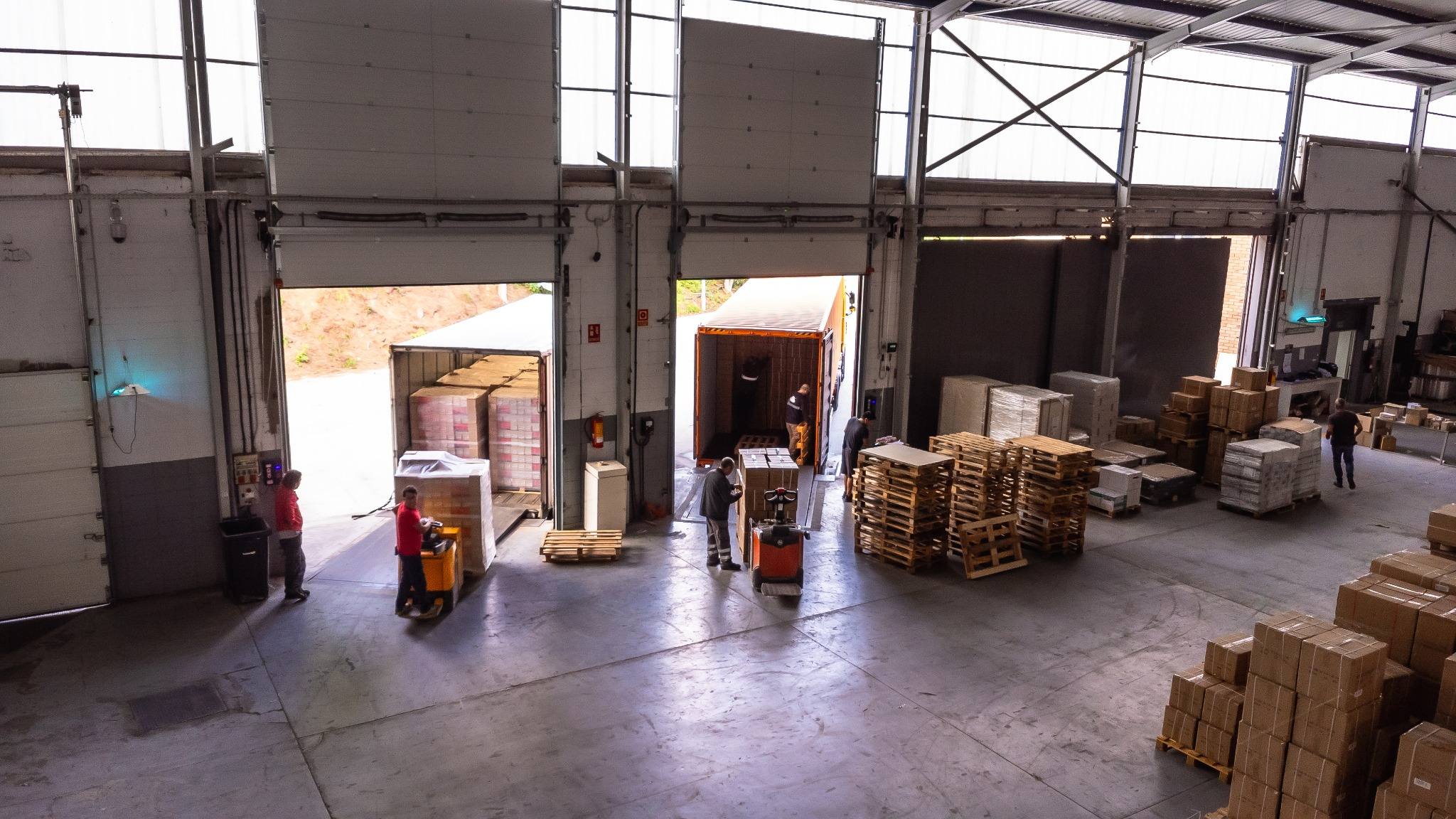
RAIN RFID is a global, standards-based wireless technology that connects billions of everyday items to the internet, operating via Ultra-High Frequency (UHF) radio waves. This technology allows businesses to uniquely identify, locate, and authenticate thousands of individual items per second simultaneously, from a distance of several meters, and without requiring a direct line of sight. It serves as a foundational tool for modern logistics, inventory tracking, and supply chain management.
As industries evolve, there is a growing demand to make these RAIN devices "smarter" by embedding sensors that track environmental conditions like temperature, humidity, and movement. However, expanding the capabilities of traditional RAIN devices introduces specific operational limitations. While standard RAIN tags excel at simple identification, upgrading them into high-function smart devices presents three major challenges that necessitate Powercast’s wireless power technology:
- The Limitation of Batteries: To continuously monitor environmental data or power added features like LED indicators, smart tags traditionally require batteries. For large-scale deployments involving thousands of devices, relying on batteries creates an expensive maintenance loop of manual replacements, operational downtime, and significant environmental waste.
- The Power Deficit for Advanced Tasks: Standard passive RAIN tags rely solely on the brief burst of energy received from a reader during a scan. This limited energy is insufficient to continuously run active sensors, store long-term data, or execute real-time analytics at the "edge" of the network.
- Data Gaps and Operational Risk: If a battery fails or a device lacks a continuous power source, data collection stops. In critical industries such as food safety, pharmaceuticals, and data center monitoring, these power-related blind spots can lead to undetected product spoilage, component failures, or costly compliance violations.
Powercast Technology is required because it bridges this gap. It provides the persistent energy layer needed to keep advanced RAIN devices operational without wires or disposable batteries.
Enhancing RAIN RFID with Powercast EDGE
Powercast solves the power limitations of smart RAIN RFID networks through its EDGE platform, which uses a structured "Hub-and-Node" architecture. Instead of relying on individual batteries or physical power cables, the system transmits power over the air, creating a localized, continuous wireless power zone.
EDGE Hubs are installed throughout a space to broadcast a continuous field of wireless radio frequency (RF) energy, creating a localized "power zone" similar to a Wi-Fi hotspot. When an EDGE Node such as a smart sensor or tracking tag enters this zone, it automatically captures this airborne energy and converts it into a usable form. This converted power is then used to continuously charge its energy storage, enabling perpetual, wireless operation without ever needing physical power cables or battery replacements.
Integrating Powercast’s wireless power technology with RAIN RFID systems elevates simple tracking tags into highly intelligent, autonomous data nodes. The following five areas detail how this integration works to make RAIN devices smarter, more reliable, battery-less, and highly efficient:
- Continuous Environmental Monitoring: Standard passive RAIN tags only turn on when actively pinged by a reader. Adding Powercast technology provides a constant trickle of background energy, allowing integrated sensors to continuously monitor and log data like temperature, humidity, or vibration even when no reader is nearby.
- Eliminating Battery Dependence: Traditional smart tags require internal batteries that eventually drain and demand manual replacement. Powercast replaces these batteries with a sustainable, over-the-air energy supply, allowing RAIN devices to operate indefinitely and reliably for years with zero physical maintenance.
- Preventing Data Blind Spots: If a battery dies or a tag moves out of range in a standard setup, tracking stops. Because Powercast EDGE Hubs establish a persistent, wide-area energy field, the RAIN devices remain constantly powered, ensuring that critical data is never lost in high-stakes industries like pharmaceuticals or aerospace.
- Enabling Edge Intelligence: Standard RAIN tags suffer from a severe power deficit, limiting them to basic ID numbers. With a steady stream of wireless power, these devices can support advanced microprocessors that process data, run basic algorithms, and make intelligent decisions right on the tag.
- Maximizing Network Efficiency: In traditional setups, the RFID reader must emit energy to wake up the tag and listen for data at the same time. By using Powercast EDGE Hubs to handle the power delivery in the background, RAIN readers can focus entirely on data capture, resulting in faster scans and longer read ranges.
Transforming Infrastructure with Smart RAIN RFID
The integration of Powercast’s over-the-air wireless power platform with RAIN RFID infrastructure converts the concept of "smart tracking" into a concrete, measurable business asset. By eliminating the restrictions of both cords and batteries, this unified technology fundamentally changes how physical items are managed across various industries. Organizations are no longer required to choose between the rapid tracking capability of standard RFID and the continuous data collection of active sensors, as both features are provided in a single, maintenance-free package. Consequently, operational tracking is shifted from a reactive model, where an item's status is only known at the moment of a physical scan, to a proactive system of continuous intelligence at the “edge” of the network.
The practical benefits of wirelessly powered RAIN RFID devices are actively solving complex operational challenges across several major industries:
- Smarter Supply Chains and Food Safety: Wirelessly powered RAIN tags continuously log temperature throughout a shipment's journey to prevent the spoilage of food or pharmaceuticals. Integrated LED indicators can also be triggered to instantly light up specific, recalled, or contaminated crates for immediate removal.
- Predictive Maintenance in Smart Manufacturing: Battery-less RAIN sensors embedded in machinery continuously monitor heat, moisture, and vibration to prevent costly downtime. These EDGE Nodes can be safely sealed inside hard-to-reach or hazardous components to stream real-time data, since they never require battery changes.
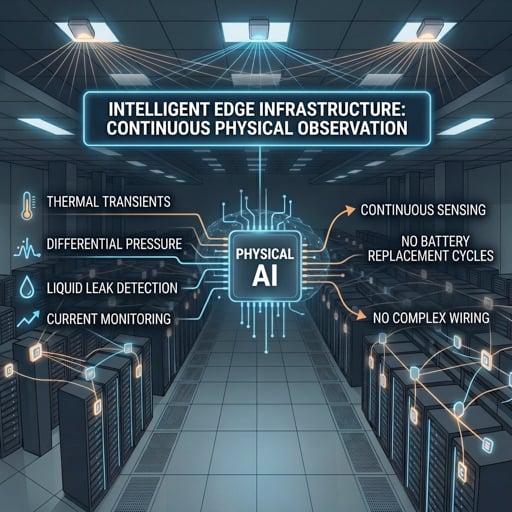
- Optimized Data Centers and Infrastructure: Densely deployed, battery-less environmental tags monitor micro-climates across thousands of server racks in real time. This continuous data stream allows facility systems to dynamically adjust cooling, cutting massive energy costs while maintaining network uptime.
- Corporate Sustainability and Waste Reduction: Swapping disposable chemical batteries for clean, over-the-air energy harvesting eliminates the hazard of millions of dead batteries entering landfills. This shift directly supports modern green initiatives and complies with strict corporate sustainability goals.
Ultimately, the integration of Powercast wireless technology with RAIN RFID infrastructure signals the end of the "passive" asset tracking era. What used to be simple plastic labels meant for basic inventory scanning are now self-sustaining, intelligent edge devices capable of processing, logging, and adapting. By building a persistent energy layer into the spaces we work and live in, Powercast isn’t just making RAIN devices more reliable and battery-less; it is providing the invisible foundation for a truly autonomous, interconnected world.